
THINKING: housing
A 2026 Guide to Multifamily ADUs in California

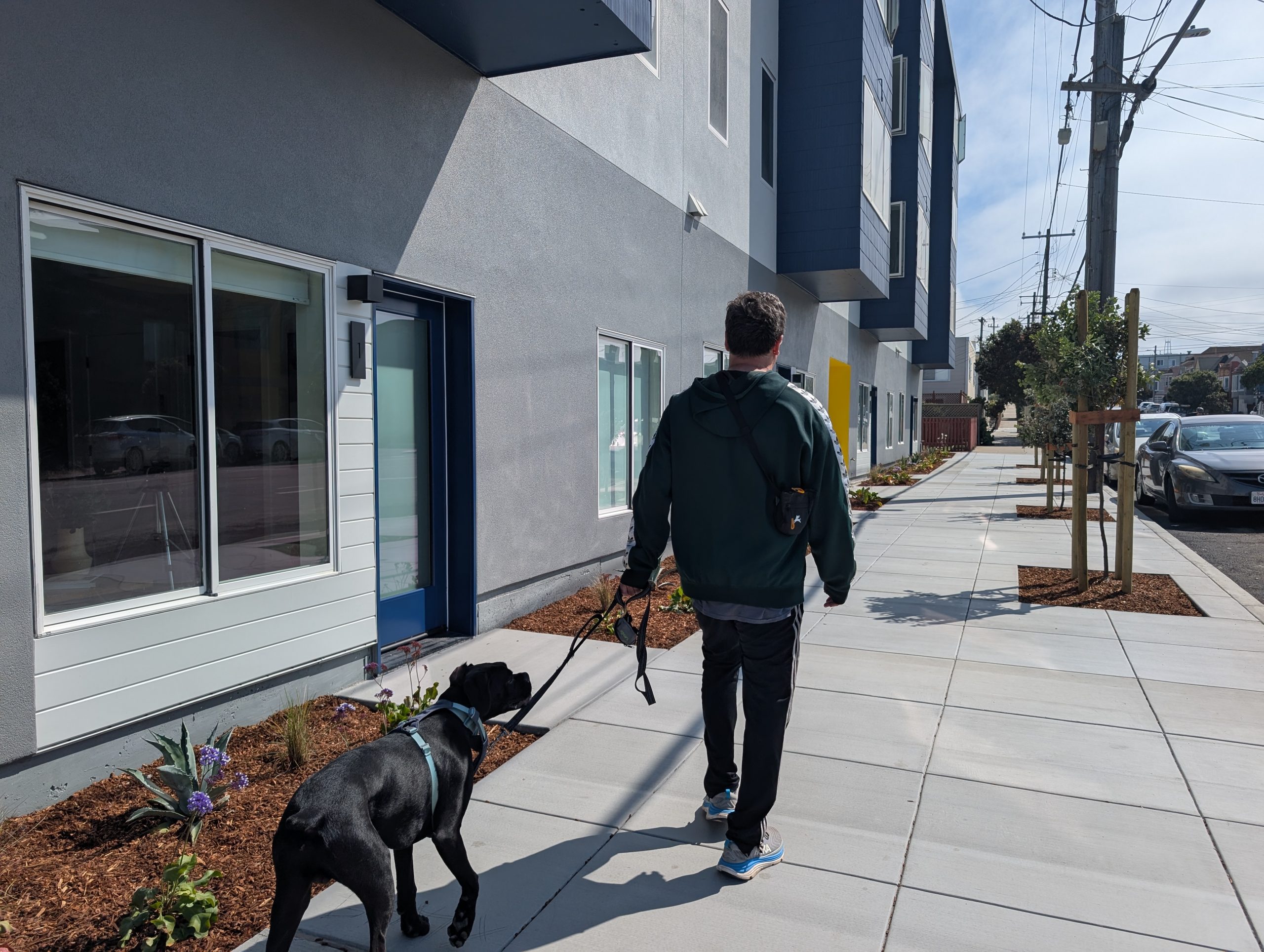
Multifamily ADUs in California can be added for a fraction of the cost of new construction and the land is typically already owned (sometimes at a very low basis). These units are permitted ministerially with a building permit, avoiding a separate entitlements phase, subjective decision making and design review.
For developers or owners of existing multifamily properties, ADUs serve as a significant value-add strategy — allowing higher density projects while also bypassing many of the standard Planning-related hurdles faced by new construction.
What Is a Multifamily Property in California?
California State ADU Law defines a multifamily property as a structure with two or more attached dwelling units on a single lot. It’s important to distinguish that your property meets this criteria in order to qualify as multifamily under ADU state laws. If the property does not have attached units, it falls under single family ADU laws. Properties with multiple single family dwelling units on the same lot (like townhouses or a cottage court) do not qualify as “multifamily dwellings.”
Laying Down the Laws: How Many ADUs Can You Add?
State law allows for both conversion units (units in existing structures) and detached units that can be ground up in vacant portions of the site.
Detached Units (SB 1211)
SB 1211 updated the rules around building detached units:
- 8 new construction detached units can be built on a parcel (previously capped at 2), depending on the existing number of multifamily units on the site (the amount of added ADUs cannot surpass the number of existing units on site).
- This allows property owners to better utilize vacant parts of their property such as surplus parking or landscaped areas.
- Through this legislation there is no longer a requirement to replace surface parking spaces when converting parking into ADUs if you are located within a half mile of a public transit stop — making parking or carports extremely suitable for this type of development.
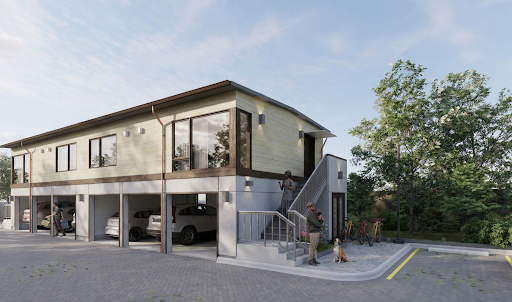
- You can also add two story units with parking on the ground floor, although some jurisdictions may create extra paperwork if you are not replacing an existing carport.
Conversion Units
Conversion ADUs allow you to create multiple ADUs within existing multifamily structures. Up to 25% of the existing multifamily dwelling units can be converted into ADUs. Recent guidance from HCD suggests that jurisdictions can no longer limit the 25% to a specific building but that the 25% rule applies to the total unit count at the property, so if you have a 400 unit property with 25 buildings on it, you could add 100 units concentrated on one portion of the site vs. being constrained by the unit count per building (i.e. a 12 unit building would only be eligible for 3 ADUs). If you are within a half mile of public transit parking can be removed for conversion ADUs, however we would suggest doing a parking analysis to determine how much parking you need based on tenant demand before undertaking an ADU project.
Other ADU Regulations That Will Apply to Your Project
Unit Size
Cities must allow at least an 800 square foot unit. There is a maximum size of 1,200 square feet for all ADUs but this can be modified if there is a local ordinance in effect, assuming the local ordinance is in compliance with state law (many are not).
Caps on Impact Fees
State law limits impact fees that can be charged on ADUs. Units under 750 square feet are not subject to impact fees, and per existing state law units under 500 square feet are not subject to school fees (although there is more gray area in the school fee calculation). Units over 750 square feet are charged impact fees proportionally.
Affordable Housing Mandates and ADUs
Jurisdictions can still apply their local inclusionary housing requirements to ADU projects. This means that if projects over 10 units require one Below Market Rate (BMR) unit, your 10 unit ADU project will face the same requirement (or pay an in lieu fee).
Where Do Multifamily ADUs Usually Go?
Detached Units
Up to 8 detached units, as long as it does not exceed the existing count of units on site.
Taking Over Surface Parking or Carports
Placing detached ADU clusters directly in place of parking spaces or above them.
Underutilized Spaces on Site
Using excess outdoor space to add new detached units. Examples include: unused tennis courts, landscaped lawns/open space, dog runs or pet areas.
Conversion Units
Up to 25% of existing multifamily unit count.
Garage Conversions
Transforming existing enclosed garage stalls into standalone apartments.
Tuck-Under Parking
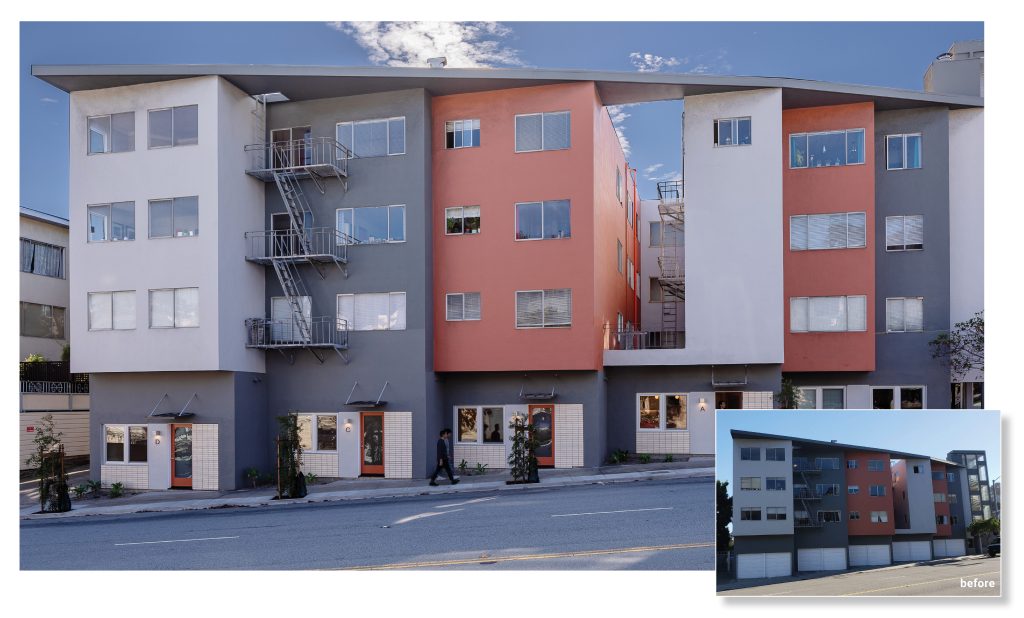
Enclosing open ground floor parking spaces into new units.
Utility & Service Rooms
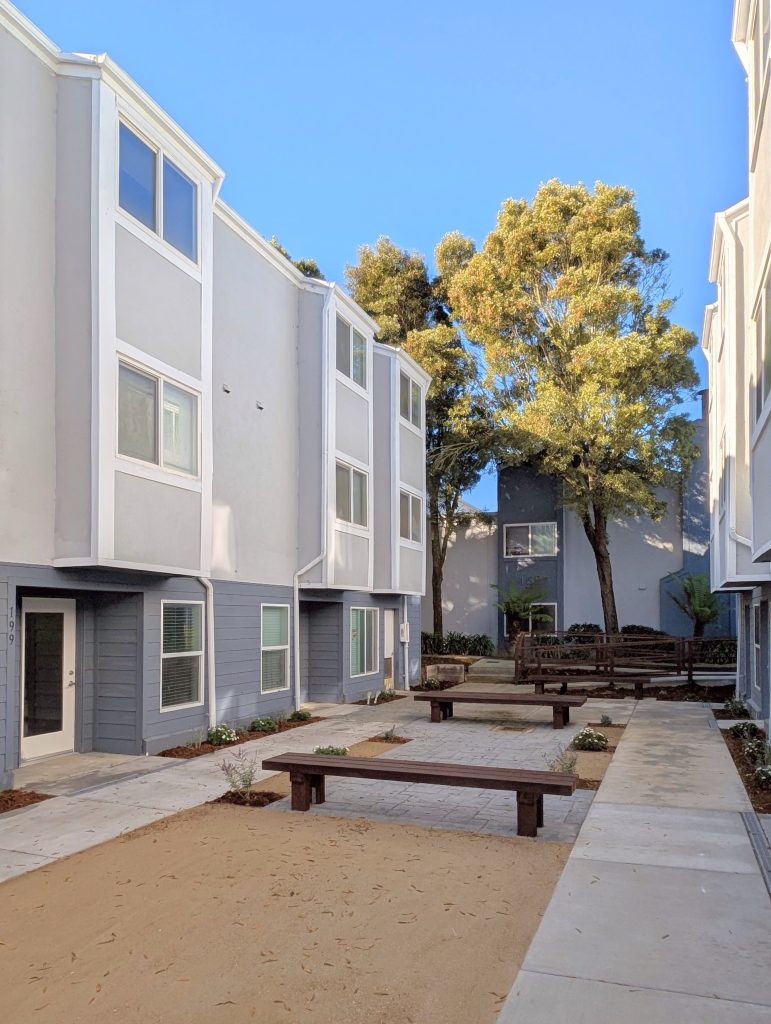
A good solution for repurposing oversized or outdated utility or amenity spaces that no longer serve an operational function. This often results in a lower unit count so it should be used in conjunction with other strategies for economies of scale.
Not ADUs, but Worth Looking At: The State Density Bonus
By dedicating a small percentage of the building’s units to affordable or senior housing, developers can earn a legal “bonus” to build more units than local zoning allows. This is typically used on vacant sites but can also be applied to existing multifamily sites: areas like parking lots and tennis courts can become new multifamily buildings.
- Projects qualify for up to a 50% density increase for traditional mixed-income developments.
- Projects can achieve up to an 80% to 100% density increase (or completely unlimited density in specific transit zones) if the development is dedicated entirely to affordable housing.
- A stacked density bonus is available for projects that include middle income units, this can result in a 100% bonus with a relatively modest number of BMR units.
For more information about the state density bonus, check out our prior blog post.
Conclusion
Multifamily property owners have many paths to adding additional units and when acquiring a property it’s good to look at it both as an existing asset and a potential development opportunity. The state keeps refining these laws; our notes from the California Infill Summit cover what’s working and what’s next.
Please get in touch with us if you have questions or a property you’d like us to review.