
THINKING: housing
Notes from the California Infill Summit: Inside SB 1116’s Fix for SB 1123

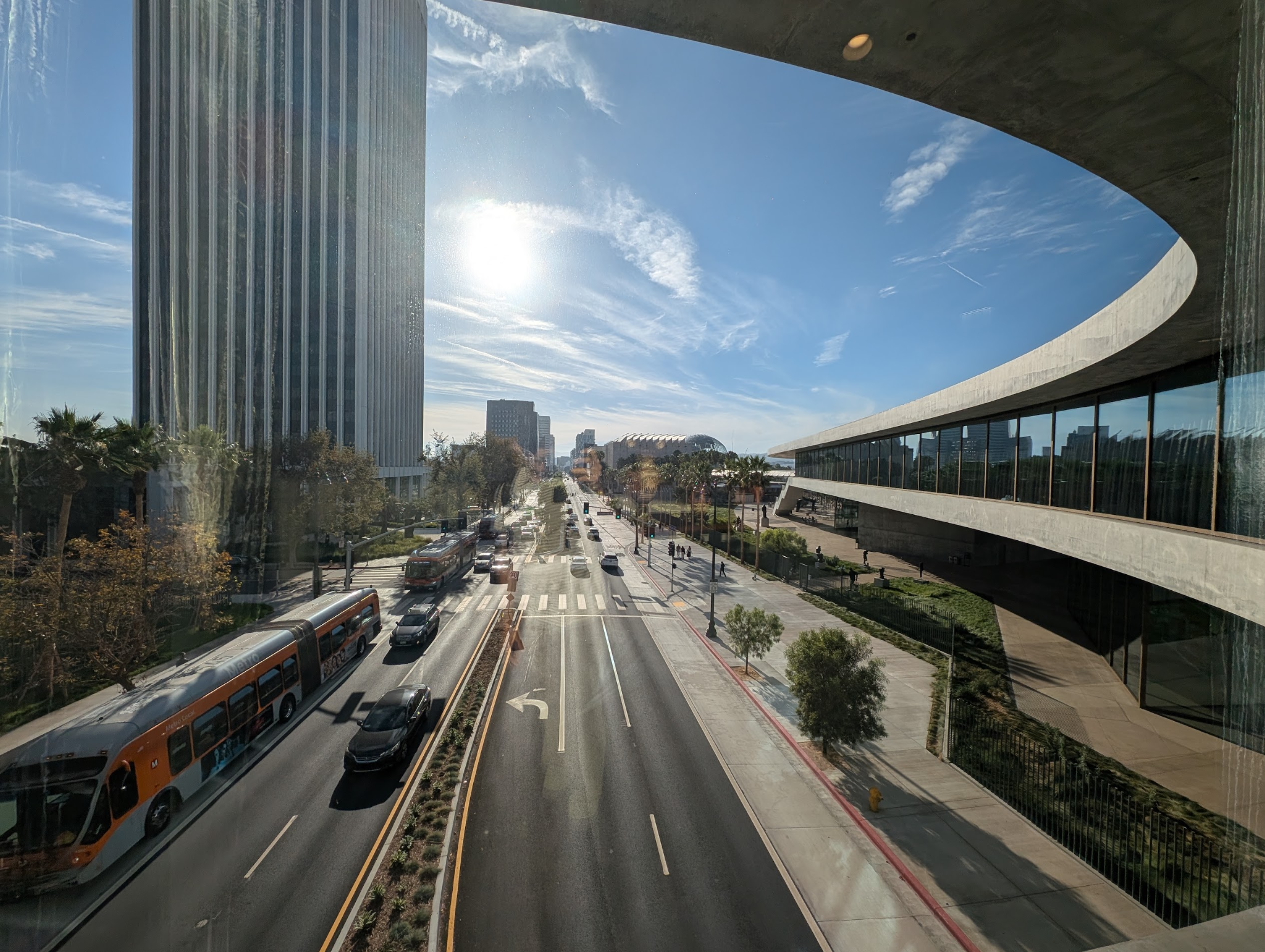
I attended this year’s California Infill Summit, hosted by the Council of Infill Builders in Los Angeles.
The land use panel moderated by Marty Akerblom of Allen Matkins, with Louis Mirante (Bay Area Council), Dave Rand (Rand Paster Nelson), Brian Hanlon (California YIMBY), Meea Kang (Council of Infill Builders), and Colin Parent (Circulate Planning & Policy) took stock of a decade of state housing legislation. The headline theme: the laws that work share a common formula, and the laws that don’t ignored it.
The ADU law is still the gold standard
Nearly every panelist returned to the same benchmark: California’s ADU law. Mirante called it the one unambiguous success story at the state level, and Hanlon explained why: it paired upzoning with streamlined review and capped fees, all at once. That combination, he argued, is the template missing from most other infill legislation. The numbers back it up: ADUs made up roughly 30% of statewide housing production in 2025, and panelists credited them as the main reason overall housing production hasn’t declined since 2016, with production holding around 35,000 units a year. It is worth noting that the ADU law has been updated with multiple pieces of legislation to make it the success story it is today.
Working and not-working: a quick scorecard:
- AB 2097 (parking minimums near transit): removed a major cost and design barrier, per Kang.
- SB 35: has driven real production among affordable developers — Kang noted the “shot clock” is the most valuable piece, since it gives cities cover to approve projects without taking political heat for the decision.
- Density Bonus Law: Parent pointed out it lets projects depart from baseline zoning while staying compliant with the Housing Accountability Act — and usage has grown from roughly 20% of projects to 50%.
- SB 9: widely viewed as underperforming. Mirante said its flaws were known before passage and legislative outreach went unanswered. Hanlon agreed the bill was expected to need a cleanup round, but it drew outsized opposition instead. The panel’s read: buying and selling ADUs under the 2023 opt-in law (often called “1033”) is proving more effective than SB 9’s new-construction path — the first unit sold in San Jose for $530,000 in a market where the typical home sells for $1.9 million.
SB 79: early days, big expectations to manage
SB 79, aimed at building apartments near transit stations, won’t show its full effect until the next RHNA cycle, Hanlon said. Palo Alto’s inability to pass a local implementation program in time led developers to flood in with applications during the first two weeks it was eligible, showing the interest in using this law. Jurisdictions can carve out specific parcels for eligibility until the next RHNA cycle, but panelists were unbothered by the delay: those sites become developable regardless once the next cycle arrives.
SB 1116’s cleanup of the Starter Home Revitalization Act
SB 1116 passed the Assembly with a 54-0 vote on August 25, 2026.
The panel’s discussion of the Starter Home Revitalization Act (SHRA) framed it as one of the more consequential ownership-focused reforms in recent years, and the one with the most active legislative attention this session.
The lineage so far:
- SB 684 (2023) launched the SHRA, allowing streamlined, ministerial (no discretionary hearing, no CEQA) approval for subdivisions of up to 10 parcels and housing developments of up to 10 units in multifamily zones, effective mid-2024.
- SB 1123 (2024) extended that same streamlined pathway to vacant lots in single-family zones up to 1.5 acres, provided the site sits amid substantially urban uses. This is when the starter-home framework reached into single-family zoning. It also recognized tenancy-in-common and community land trust structures as eligible ownership forms, effective July 2025.
What SB 1116 changes:
Introduced this session by Senator Caballero, SB 1116 is a cleanup bill responding to how cities have actually implemented SB 1123 over the past year. HCD issued technical assistance letters rebuking Oakland and Hayward in early 2025 for imposing restrictions the law didn’t allow — Oakland required conditional use permits and enforced setback and open-space standards that undercut qualifying projects, while Hayward improperly limited the law’s application to sites zoned exclusively for multifamily use. SB 1116 responds directly to that pattern of local resistance:
- Redefines “vacant.” Under SB 1123, a lot with a permanent structure only counted as “vacant” if that structure was abandoned and uninhabitable. Both conditions had to be met, and “uninhabitable” had no statutory definition, leaving room for cities to argue about it. SB 1116 rewrites the standard to abandoned or untenantable, as defined in Section 1941.1 of the Civil Code, swapping “and” for “or” so only one condition has to be met, and swapping in a defined, external legal standard instead of an undefined one. Civil Code §1941.1 is the state’s existing habitability statute (also used in landlord-tenant law); it lists concrete defects: no effective weatherproofing, no working plumbing or gas connected to an approved sewage system, no functioning heating, no working electrical, no safe floors, stairways, and railings that make a structure untenantable. A structure that would once have needed to be both abandoned and meet an undefined “uninhabitable” bar now only needs to fail one of these two, well-defined tests.
- Tightens the site-eligibility tests more broadly, closing gaps cities have used to disqualify parcels the law was intended to cover.
- Reduces minimum lot size to provide flexibility. A newly created parcel on a plot zoned for multifamily housing may be as small as 480 square feet, provided that the average size of the newly created parcels is 600 square feet or larger. If the parcels are zoned for single-family residential use, a newly created parcel may be as small as 960 square feet, provided that the average size of the newly created parcels is 1,200 square feet or larger.
- Increases design flexibility and adds new reporting requirements to track how the law is actually being used.
Where the panel sees the real barriers now
With the legislative framework largely in place, panelists turned to what’s left: hard costs. California housing costs roughly 2.3 times what it does in Texas, driven by a mix of tariffs, inflation, impact fees, infrastructure costs, labor, and building code and inspection requirements. Hanlon argued the next phase of policy work needs better traceability — understanding which levers actually move the cost needle before spending political capital on them.
Other highlights pertaining to current California land use legislation:
- Homeownership, not just rental supply in an update to the State Density Bonus (AB 2433). Mirante pointed to a structural shortage of for-sale homes — for-sale product is selling at roughly double the price of comparable rentals in the Bay Area — and argued the next frontier is construction defect reform and modernizing the Subdivision Map Act. Parent noted his own current bill, AB 2433, adds for-sale provisions at the request of its sponsor. This bill is still awaiting a vote.
- Project types are cycling. Rand noted podium projects that took years to entitle no longer pencil in this cost environment; developers are now returning to re-entitle those same sites as lower-density townhouses, only to run into minimum density requirements written for the podium era.
- SB 1117: Impact fee limits on ADUs. This bill would require fees on ADUs over 750 square feet to scale proportionally rather than jumping at a threshold — panelists flagged the ULA transfer tax as a cautionary example of what happens when a policy has a cliff instead of a ramp. This bill just passed the Legislature.
- AB 1903 (Wicks): a construction-defect, right-to-repair bill aimed at giving builders a chance to fix problems before litigation escalates costs. This would make it much simpler to build condominiums. This is still pending on the floor.
- Prop 13 split roll and Prop 45: Hanlon estimated a serious split-roll campaign would need at least $50 million to run, but noted Prop 45 is polling encouragingly, in the neighborhood of 70% support, notwithstanding opposition from Jane Fonda and the state’s construction trades council. Prop 45 would put limits on environmental review for essential projects in California.
Summary
The panel’s throughline was consistent: legislation that combines upzoning, streamlined ministerial review, and capped fees works. The ADU laws and, increasingly, the Starter Home Revitalization Act are the proof points. SB 1116 is exactly the type of follow-on bill needed to close the loopholes in SB 1123. Seeing it pass the Legislature is a big win for housing in California, the governor is expected to sign it and it will take effect in 2027.
Edited to clarify the final version of SB1123 on 8/27/2026