
THINKING: housing
SB 1123 & SB 684: Density Calculations and Vacant Lots Explained

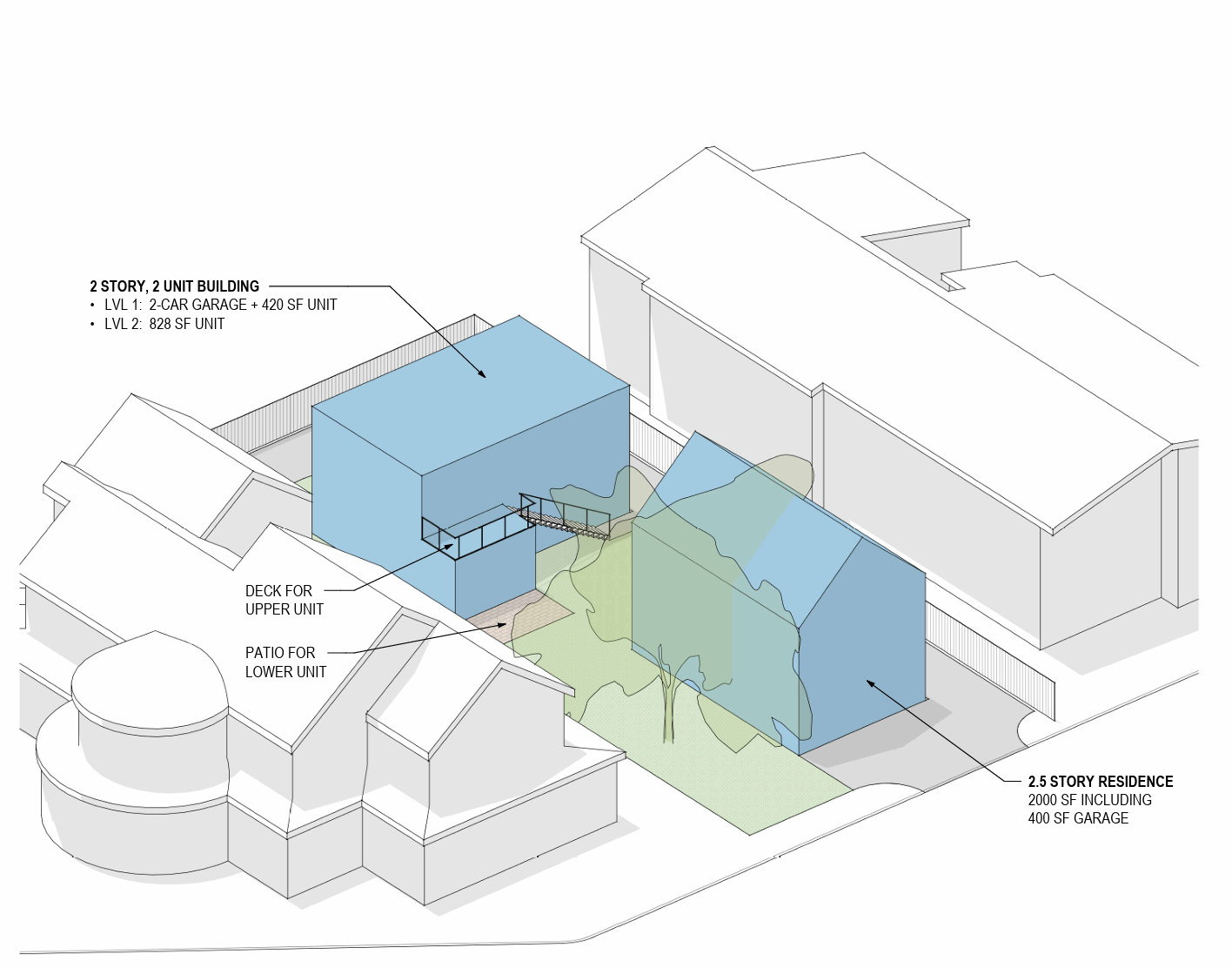
When SB 684 was signed into law in 2023 and expanded via SB 1123 in 2024, it promised something California had struggled to deliver for decades: a streamlined, ministerial path to subdividing urban residential lots for small-scale housing. But while the statutes itself were relatively straightforward, its application was not. OpenScope wrote a detailed analysis of these laws back in March 2025, but at that time there were still implementation questions that surfaced as applicants began to file real project applications with cities.
Almost immediately, practitioners and local jurisdictions began asking the same questions: How should density be calculated after an SB 684 or SB 1123 subdivision? Could an existing home remain on the property without disqualifying a project? Depending on the jurisdiction, the answers varied and those interpretations had real consequences for project feasibility.
Over the past several months, the California Department of Housing and Community Development (HCD) has addressed both questions through Technical Assistance letters issued to the Cities of Morro Bay and San Diego. Neither letter rewrites SB 684 or SB 1123 outright. The Morro Bay letter clarifies how HCD believes the density provisions were always intended to operate. The San Diego letter does something slightly different: it confirms how a 2025 legislative amendment resolved the statute’s vacancy requirement, giving local agencies and practitioners guidance on how to apply it.
What is SB 684?
SB 684 streamlines approvals for starter homes in infill developments of 10 units or less in multi-family zones. It amends the Subdivision Map Act to make it easier to split an existing parcel into multiple, smaller properties suitable for smaller homes.
What is SB 1123?
SB 1123 expands SB 684 into single family zones.
Density Is Calculated After Subdivision, Not Before
One of the first questions practitioners asked after SB 684 was enacted was deceptively simple: How should density be calculated?
Many local jurisdictions assumed that subdivision did not change a property’s overall development potential. Under that interpretation, the maximum number of units was determined on the original parcel before it was subdivided. A lot zoned for two dwelling units, for example, would remain limited to two units regardless of how many legal parcels were ultimately created.
HCD addressed this issue in May 2025 letter to Morro Bay with a detailed analysis. HCD explained that SB 684 and local zoning regulate two different aspects of development. SB 684 establishes a ministerial process for subdividing qualifying properties into up to ten parcels. Once those parcels are legally created, however, each parcel is governed by the density permitted by its underlying zoning, not by the maximum number of units that could have been constructed on the original parcel before subdivision.
This distinction may seem technical, but it has important implications for site analysis. Rather than evaluating development potential solely at the scale of the original lot, practitioners should consider what development rights apply after subdivision has occurred. In other words, the critical question is no longer, “How many units can I fit on this parcel?” but rather, “What development rights exist once this parcel has become several legally distinct lots?”
That shift in perspective significantly expands the range of sites that may warrant further analysis under SB 684. While every project must still satisfy the statute’s subdivision requirements and all applicable zoning standards, HCD’s interpretation makes clear that subdivision and density are separate questions, and they should be analyzed separately.
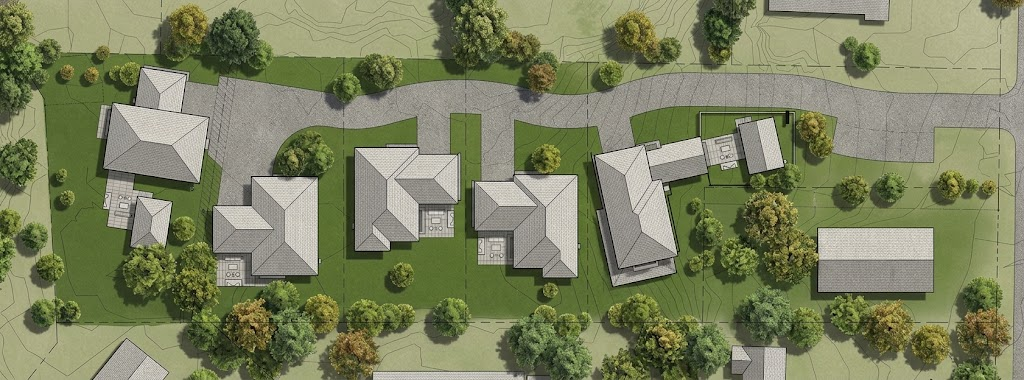
If you already have a home on your lot can you still build an SB 1123 subdivision?
While the Morro Bay letter clarified how density should be evaluated after subdivision, another important question remained. What happens when a property already contains a single-family home? Can it still be subdivided?
SB 1123 expanded the Starter Home Revitalization Act (SHRA) to include qualifying vacant lots zoned for single-family residential development. In practice, however, that raised an obvious question. If a goal is to preserve existing homes, how can the property still satisfy the statute’s vacancy requirement?
The answer lies in the use of a remainder parcel, but the mechanism for that answer predates the letter itself. On June 30, 2025, Governor Newsom signed AB 130, a budget trailer bill, which amended Government Code section 66499.41 to expressly authorize the designation of a remainder parcel that “retains existing land uses or structures, does not contain any new residential units, and is not exclusively dedicated to serving the housing development project.”
In an October 2025 Technical Assistance letter to the City of San Diego, HCD confirmed how that amended provision applies in practice. Rather than treating the existing residence as part of the proposed development, the home may be designated on a remainder parcel that is not proposed for new residential construction. HCD further clarified that the remainder parcel is excluded from the ten-parcel subdivision limit and from density calculations, while the balance of the site may be evaluated independently for SHRA eligibility.
This mechanism is significant because it resolves what many practitioners viewed as an inherent tension in the statute. HCD explains that the vacancy requirement was intended to prevent the demolition of viable housing and preserve existing deed-restricted and price-controlled homes, not to require demolition as a prerequisite for redevelopment. The remainder parcel provides the mechanism for accomplishing both objectives: retaining an existing home while allowing the balance of the property to be subdivided and developed.
From Interpretation to Implementation: What This Means for Site Feasibility
Individually, each Technical Assistance letter answers a specific implementation question. Together, they describe a more complete framework for evaluating small-lot subdivision opportunities under SB 684 and SB 1123.
The Morro Bay letter establishes that subdivision and density are separate analyses. A qualifying subdivision is processed ministerially under SB 684. Once the new parcels are created, each parcel is evaluated based on the density permitted by its underlying zoning.
The San Diego letter addresses the next question. If an existing home is retained on a remainder parcel, the balance of the site may still qualify for subdivision and development under the Starter Home Revitalization Act. The existing residence remains in place, while the newly created parcels become the focus of future development.
Viewed together, these interpretations provide a much clearer framework for evaluating potential projects. The analysis is no longer limited to asking how many units can be built on a single parcel. Instead, practitioners can evaluate how a site may be subdivided, how the resulting parcels are regulated, and how existing housing can be preserved as part of the process.
For architects, developers, and property owners, that distinction matters. Feasibility studies depend on understanding not only what the law allows, but also how the law will be administered. These letters provide important guidance on both. For further information about how SB 1123 works in Los Angeles, LA City Planning has issued a memo available here.
For architects and developers, these clarifications are valuable because they reduce uncertainty during the earliest stages of a project. Feasibility studies often hinge on questions that cannot be answered by reading the statute alone. How those statutes are interpreted by local agencies can determine whether a project moves forward or never gets past an initial site review.
The Morro Bay and San Diego letters provide greater clarity on several of those questions. They establish that subdivision and density should be evaluated independently, and they confirm that an existing home may be retained through the use of a remainder parcel while new development proceeds elsewhere on the site. Together, those interpretations provide a more reliable framework for evaluating development potential.
That does not mean every property is suddenly a viable SB 684 or SB 1123 project. Every site must still satisfy the statutory requirements, local zoning regulations, and the practical realities of site design. But it does mean that some properties previously dismissed because of uncertainty around density calculations or the treatment of existing homes deserve a second look.
Why Technical Assistance Matters
California has passed a remarkable amount of housing legislation over the past several years. But legislation alone doesn’t build housing. Projects move forward only when applicants, cities, and state agencies develop a shared understanding of how those laws should be applied.
The Morro Bay and San Diego letters suggest that HCD is taking an expansive view of SB 684 and SB 1123. Rather than reading ambiguity as a reason to limit development, the agency is interpreting the statutes in a way that advances their stated purpose: creating opportunities for incremental housing while preserving existing neighborhoods. For anyone evaluating development opportunities, these interpretations are worth paying attention to. They won’t make every project feasible, but they may change which sites deserve a closer look. The Legislature has since responded to these same implementation fights with SB 1116.
If you’re exploring a development opportunity, contact OpenScope to discuss how these recent HCD clarifications may apply to your project.