
THINKING: housing
SB 79 Explained: California’s New Transit-Oriented Development Law


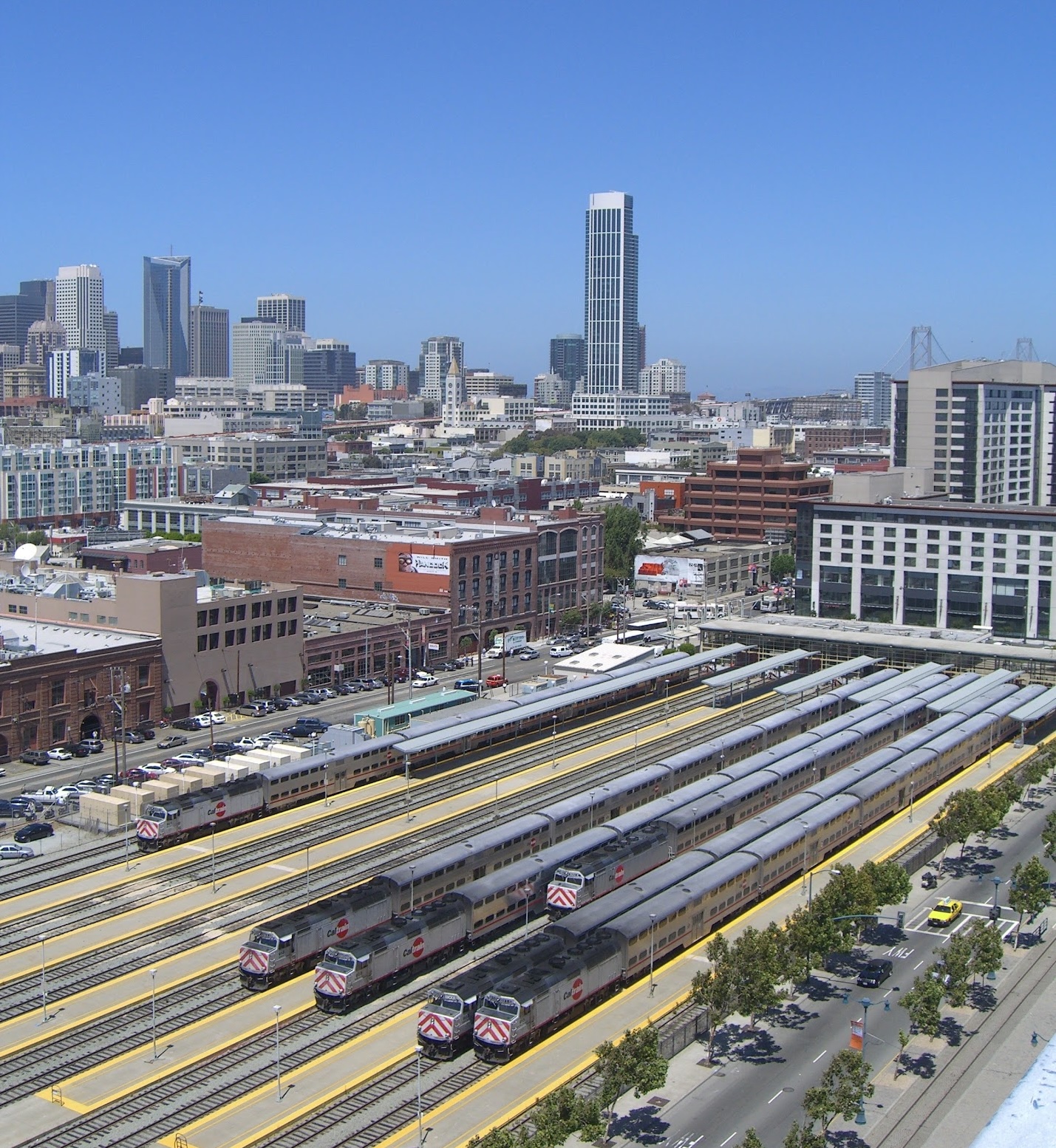
On July 1, 2026, SB 79 went into effect throughout California. The bill establishes increased building height and density regulations for multifamily housing developments near high quality transit stops. The criteria for which parcels qualify is broken down into two tiers. The first tier includes parcels near major transit stops serviced by over seventy-two heavy rail trains per day. The second tier includes parcels near major transit stops serviced by light rail, commuter rail, and bus rapid transit (dedicated bus-only lanes). The only counties with qualifying transit stops are San Francisco, Alameda, Santa Clara, San Mateo, Sacramento, LA, Orange, and San Diego.
What Is SB 79? The Two Development Tiers
Within the two tiers, SB 79 has separate rules for projects within 1/2 mile, 1/4 mile and 200 feet of transit stops, shown in the tables below.
Tier 1: Heavy Rail / Very High Frequency Commuter
| Tier 1 | Within 200 ft | Within 1/4 mile | Within 1/2 mile |
|---|---|---|---|
| Height | 95 ft (9 stories) | 75 ft (7 stories) | 65 ft (6 stories) |
| Density | 160 du/acre | 120 du/acre | 100 du/acre |
| Density per Lot | 272 sq ft / du | 363 sq ft / du | 436 sq ft / du |
| FAR | 4.5 | 3.5 | 3.0 |
Tier 2: Light Rail / Commuter Rail / BRT
Affordability and Density Bonuses
The bill maintains existing affordability standards, requiring between 7%-13% of proposed units to be affordable. There are also protections in the bill against displacing tenants, with the bill prohibiting the demolishment of rent-controlled buildings where renters have lived at any time in the past seven years. All benefits granted under the State Density Bonus Law also apply to any SB 79 project. Cities with less than 35,000 residents (e.g. South Pasadena) only qualify for the 1/4 mile requirements.
Exemptions
Cities also have substantial leeway in where and how they implement SB 79. There are permanent exemptions for industrial employment hubs greater than 250 contiguous acres, as well as for parcels without safe walking paths to transit. Similarly, cities affected by SB 79 can either pass ordinances to temporarily exempt certain parcels or propose an “Alternative Plan”. The most notable permitted temporary exemption is for parcels which already possess a minimum of 50% of the density proposed by SB 79. Parcels vulnerable to one foot of sea level rise, with a historic resource designation, in low resource areas, or within high fire severity zones can also be temporarily exempted. These exemptions would be reassessed at the time of the next housing element, at which point cities would need to find ways of meeting the density laid out in the bill. If a city chooses to pass an Alternative Plan, they must propose zoning with total housing capacity equal to or greater than what the bill would create without reducing any qualifying parcel’s density below 50% of what SB 79 allows.
How San Francisco Is Responding
Cities in qualifying counties aren’t letting the bill take them by surprise. In San Francisco, over three-quarters of all parcels are affected by SB 79. Despite this, the city recently passed its “Family Zoning Plan” which had already increased the density in most of the qualifying parcels above the 50% threshold required. In addition, the San Francisco Implementation Ordinance 260132 was signed in May, upzoning parcels which fall outside of the Family Zoning Plan to allow at least 50% of the density required by SB 79. The ordinance also temporarily exempted parcels in low resource areas until 2032 and permanently exempted those in industrial employment hubs. In total, San Francisco showed that their Family Zoning Plan combined with the Implementation Ordinance created an Alternative Plan that helps the city meet SB 79’s density requirements.
SF Implementation Ordinance Density (50% of SB 79)
| SF Alt Plan | Within 200 ft | Within 1/4 mile | Within 1/2 mile |
|---|---|---|---|
| Tier 1 | 80 du/ac | 60 du/ac | 50 du/ac |
| Tier 2 | 70 du/ac | 50 du/ac | 40 du/ac |
How Los Angeles Is Responding
Los Angeles recently filed its “Low Rise Ordinance” which brought many of the parcels affected by SB 79 above the 50% density threshold for temporary exemption. This ordinance proposes adding bungalow courts, row houses, and town homes in what the city refers to as Opportunity Station Areas. Most of these OSAs overlap with the high quality transit stops affected by SB 79, covering 100% of parcels affected by the bill. This will allow the city to delay full adoption until 2030. This temporary exemption of all parcels in the city was formalized in its “Phased Implementation Ordinance” which also exempted industrial employment hubs and parcels without adequate walking paths.
San Jose’s Approach
San Jose, the largest city in the Bay Area, passed Ordinance 31316 to make the most of SB 79’s exemptions. The ordinance permanently exempts parcels lacking walking paths as well as industrial employment hub parcels in its north San Jose Core Area, Berryessa/International Business Park, East Gish, Monterey Business Corridor, and Old Edenvale neighborhoods. There has been local concern about how SB 79 could be paired with AB 130–a bill exempting certain developments from CEQA review–to alter historic resources. This has prompted the city to plan ordinances temporarily exempting sites with a historical resource designation. The city is also looking to narrow the definition of “demolition” so historic resources can keep CEQA review. San Jose hasn’t proposed exactly how it will meet the density requirements for parcels that aren’t exempted, but it has set up a timeline for drafting an ordinance that increases minimum density in its downtown core and other growth areas.
Find My City
As housing in California begins to take a new shape, you may be curious how your city will be affected. Through this interactive map, you can begin exploring the reach SB 79 has in your community.
Please get in touch with us if you have questions and our team will be happy to help.