
THINKING: housing
San Francisco Coliving and Cohousing Code Reform: “Shared Housing for All” Passes the Board of Supervisors
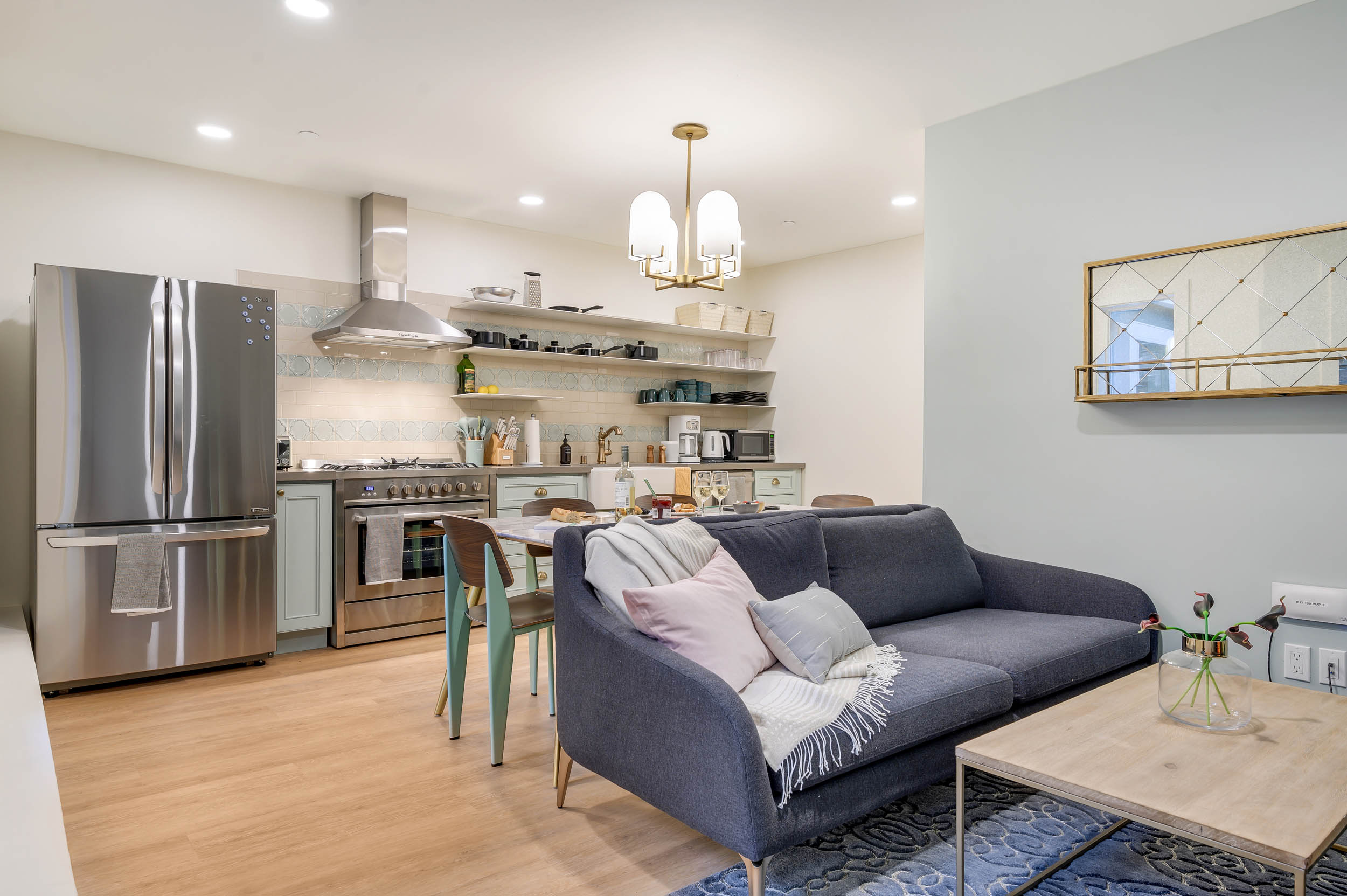
San Francisco coliving just took a major step forward, as The San Francisco Board of Supervisors voted to remove the reference to “families” when determining who can live in a unit of housing (whether that is a house or apartment dwelling) and opened up the ability for larger groups of people to legally share single dwellings. This change is a significant win for people interested in coliving and cohousing: previously, there was a cap at five unrelated people living together regardless of the size of the home. The new legislation allows an unlimited number of unrelated persons (with limits subject to other codes) in existing housing, and there is a cap on 9 people in newly built dwellings.
OpenScope has experience with this project type and the five person cap has always been a huge constraint in San Francisco – especially in large older buildings where the existing space can physically fit more than five occupants.
Under the Planning Code, a Dwelling Unit can only be occupied by a Family, as defined in the Planning Code. Groups that do not constitute a Family can occupy Group Housing. Generally, Group Housing is a type of residential use with limited cooking facilities and larger common areas. Group Housing includes boardinghouses, communes, and fraternity or sorority houses.
Currently, the Planning Code defines Family to exclude groups of more than five unrelated people, unless the group prepares and consumes meals together, controls its membership, and determines its own use of the residential space. Related family members with more than five people do not need to satisfy these criteria. Before 1978, the Planning Code did not distinguish between related and unrelated people for the purposes of defining a Family. For example, the 1957 Planning Code defined a Family as “one or more persons occupying the premises as a single and separate housekeeping unit.”
OpenScope has worked on coliving projects and we knew that this was a big problem for both operators of coliving buildings and tenants in coliving and cohousing communities. We were aware of enforcement actions where tenants were being told their living situation was illegal. On top of that, the California State Supreme Court had ruled in 1980 (in City of Santa Barbara v. Adamson) that cities could not regulate to prevent non-familial groups from living together. Why was San Francisco still relying on the word “family” and limiting non familial households to such a low number?
A small group of us reached out to Supervisor Bilal Mahmood and discussed the issue and how to best address it in the Planning Code. Supervisor Mahmood understood this was a problem and set out to address it. His legislation, after amendments, was passed January 6th and sets out to do the following:
This ordinance would remove any limitations on or references to five unrelated people living in a dwelling unit and redefine a “Family” as a “Household.” For Residential Uses established before the enactment of this ordinance, a Household is defined as a group of people that share a space with unconditional 24-hour access to a kitchen, bedroom, bathroom and that share at least one living expense. For Residential Uses established after the effective date of this ordinance, a Household is defined as one that meets the foregoing criteria and maintains no more than nine leases for all the members of the Household. A Household also includes any dependents of the Household members.
Coliving is the most affordable way to live in a city like San Francisco, and the city has a long history of shared spaces, cohousing and boarding houses (look no further than the famous 1970s book, Tales of the City). This is a crucial piece of legislation when it comes to providing a broad spectrum of homes for people across a spectrum of lifestyles and income levels.
If you are interesting in building your own coliving or cohousing community, please get in touch, we are familiar with the design and regulations of this housing type. We can design your project and help you navigate San Francisco’s permit process to get it up and running.