
THINKING: housing
Repurposing Chain Stores in California: How State Housing Laws and Zoning Reforms Are Rewriting Commercial Land Use
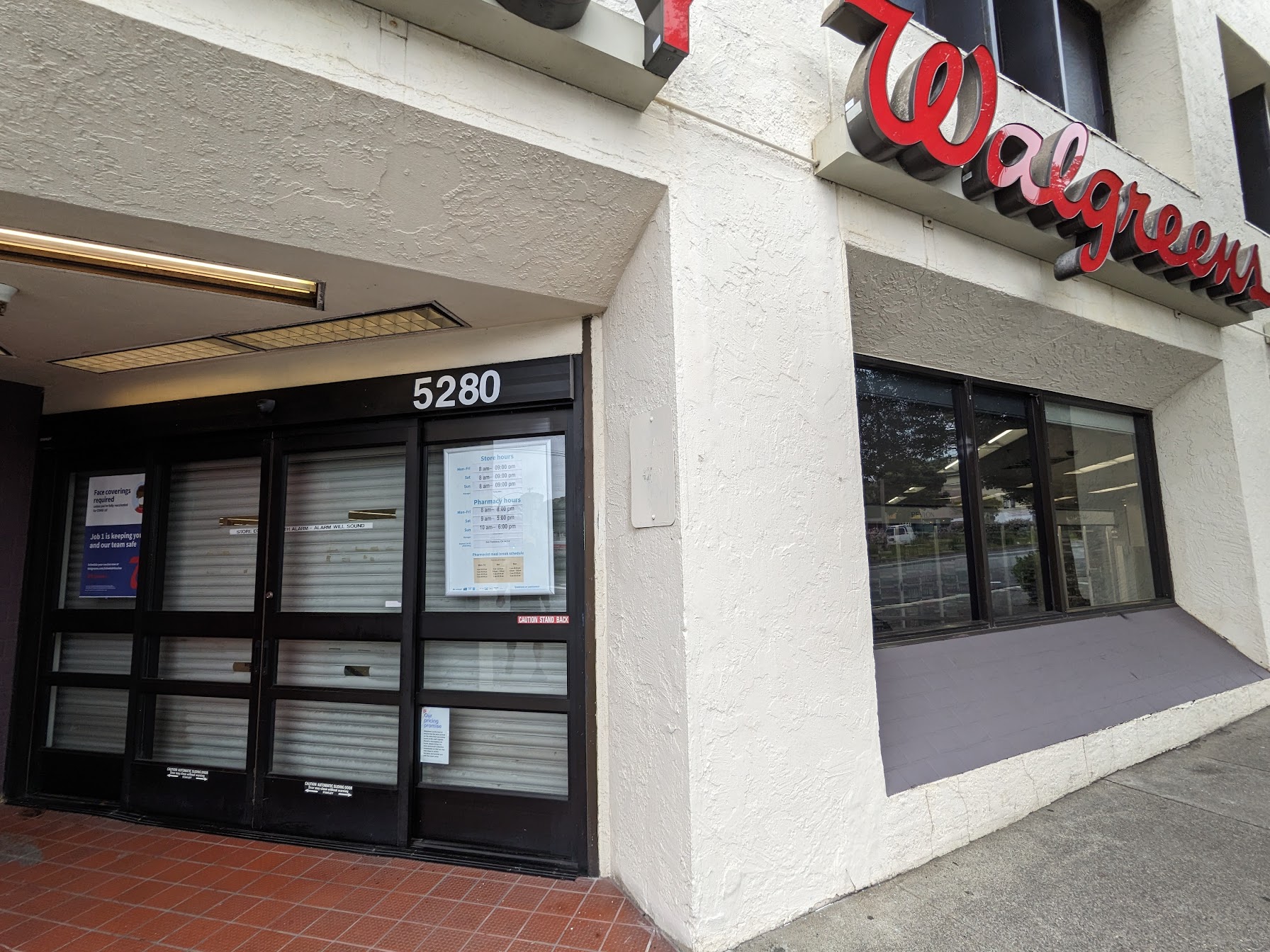
Repurposing chain stores in California is becoming a major trend, as retail sites are increasingly targeted for high-density redevelopment. New state housing laws and local zoning reforms now make it easier to convert single-use retail into mixed-use housing, accelerated by shifting brick-and-mortar dynamics during COVID.
Chain-store parcels, long treated as untouchable infrastructure, are now on the table— and in some neighborhoods, they may be the only large-scale opportunities left. As this transition accelerates, design and planning teams will need to navigate complex site constraints, community expectations, and a growing set of regulatory tools that are reshaping what gets built and where.
In the past few years numerous retailers have announced plans to close thousands of locations in prime urban areas:
- Walgreens announced plans to close 1,200 locations starting in 2024.
- CVS closed 900 locations in the last three years, and another 270 this year.
- Joann Fabrics closed 500 stories as the chain shut down.
- Rite Aid closed hundreds of stores in recent years as it went bankrupt twice.
- Other retailers including Big Lots and Macy’s also have announced major downsizing, leading to hundreds of large vacant sites.
Many Walgreens and CVS locations in particular are in dense areas with strong redevelopment potential as housing or mixed use sites.
California’s Housing Laws Driving Commercial Redevelopment
Recent California legislation has made it significantly easier to build housing on commercially-zoned sites, including large grocery stores, strip malls, and office parcels. The most relevant laws include:
AB 2011: By-Right Housing on Commercial Corridors
AB 2011 allows by-right residential development on commercially zoned properties along qualifying corridors if projects meet strict affordability and labor requirements. The law applies primarily to sites currently zoned for retail, office, or parking use, and is intended to promote mid-rise and high-density housing on underutilized commercial land — especially in areas near transit. OpenScope has covered this piece of legislation previously but interest has increased as interest rates have started to decline and sites sit underutilized.
To qualify for AB 2011 streamlining, projects must:
- Be located on a commercial corridor with a minimum 50-foot right-of-way and meet transit adjacency criteria.
- Set aside between 15% and 100% of units as deed-restricted affordable housing, depending on the development type.
- Comply with prevailing wage and skilled-and-trained workforce standards, including use of apprentices enrolled in state-approved programs.
If these requirements are met, local jurisdictions must approve the project ministerially — meaning no CEQA review, no discretionary hearings, and no appeals. This gives developers and design teams a clear and predictable pathway to entitle housing on sites that, until recently, would have been off-limits.
For more, see our deeper dive on AB2011: Using Commercial Corridors to Address California’s Housing Crisis.
SB 6: Housing Allowed on Commercial Sites — With Local Review
SB 6, also known as the Middle Class Housing Act of 2022, was passed alongside AB 2011 and similarly aims to unlock commercial land for housing. But unlike AB 2011, SB 6 does not provide by-right approval. Instead, it permits residential use on qualifying commercial parcels, but leaves the review and approval process up to local jurisdictions.
Key features of SB 6:
- Applies to sites zoned for office, retail, or parking use as of 2022.
- Requires compliance with prevailing wage and skilled-and-trained workforce rules — just like AB 2011.
- Does not override local zoning rules related to height, density, or design review — those remain fully in effect.
SB 6 offers a legal basis for housing on commercial sites in cities that want to allow it, but doesn’t force entitlement. For design teams, it can be an effective option in jurisdictions that are supportive of housing but want to retain discretion — or on sites that don’t meet the specific corridor or affordability requirements of AB 2011.
SB 35/SB 423: Streamlined Approvals in Underperforming Jurisdictions
SB 35, enacted in 2017 and still actively used, provides streamlined, ministerial approval for qualifying housing projects in jurisdictions that have not met their state-mandated Regional Housing Needs Allocation (RHNA) housing production goals. It effectively removes CEQA and discretionary review from the entitlement process — if the project meets a clear set of criteria.
To qualify under SB 35, a project must:
- Be located in a city or county that is out of compliance with its RHNA targets (most are).
- Include a minimum percentage of affordable units — typically 10% or 50%, depending on the site and jurisdiction.
- Comply with objective zoning and design standards, prevailing wage requirements, and specific site eligibility rules (e.g. no building on prime farmland, wetlands, or very-high fire hazard zones).
For commercial sites, SB 35 can offer a powerful entitlement shortcut, especially when paired with the State Density Bonus to increase height or unit count. Several of the current Safeway redevelopment proposals in San Francisco are leveraging SB 35 or SB 423 to move forward without triggering lengthy appeals or environmental review.
SB 79: Statewide TOD
SB 79, signed by the Governor in October, is one of the most transformative housing bills in years. It requires high density housing to be allowed near transit stations across the state. This (non-official) map shows the areas where it will apply. Note that the map doesn’t account for cities that may have a local plan that delays implementation of SB79, but it is a good high level guide to where this applies.
The legislation created two tiers of transit stations, based on transit type and frequency, that determine what can be built. It applies to any qualifying site zoned for residential, mixed-use, or commercial properties within a half-mile of qualifying transit (or a quarter-mile for very small cities).
SB79 includes minimum affordability standards, and tenant protections. SB 79 projects cannot require the demolition of rent stabilized homes of 3 units or above or multifamily housing that has had tenants in the last 7 years. Existing displacement laws also continue to apply.
Projects over 85’ tall will require compliance with SB423 labor standards, smaller projects do not unless they are on public land owned by a transit agency.
This piece of legislation is much more flexible than many of the other housing tools available to project sponsors. Check with your local jurisdiction as alternative plans can take the place of straight compliance with state law – there are cities where SB79 will not take effect for several years.
State Density Bonus Law: Incentives for Affordable Housing
California’s State Density Bonus Law allows developers to exceed local zoning limits — including height, floor area, and parking requirements — in exchange for providing deed-restricted affordable housing. Originally enacted in 1979, the law has been significantly expanded in recent years and is now a widely used tool for increasing project feasibility on infill sites.
Key features:
- Developers can receive up to a 50% density bonus (as of recent updates), depending on the share and depth of affordable units provided.
- There is a “stacked” density bonus option that can be applied by providing additional affordability.
- Bonus incentives include:
- Additional height or floor area
- Reduced parking requirements (often to zero near transit)
- Waivers of development standards that would otherwise physically preclude the bonus units (e.g., setbacks, lot coverage, stepbacks)
- Projects must include a minimum percentage of low-, very low-, or moderate-income units, with greater benefits available for deeper affordability or 100% affordable projects.
The law applies to both rental and for-sale housing and is often paired with other state laws like SB 35 or AB 2011 to unlock sites where local zoning would otherwise limit feasibility. In many cases — including recent Safeway redevelopment proposals — the Density Bonus Law is used to push height and yield beyond what base zoning allows, even after upzoning.
These tools are increasingly being used in tandem, actively reshaping what’s possible on commercial land across California.
Case Study: Safeway Site Redevelopment in San Francisco
A clear example of how state housing laws are reshaping commercial land is unfolding in San Francisco, where multiple Safeway properties are being proposed for high-density redevelopment.
The most prominent:
- Marina District (Lombard Street) – A 25-story, 790-unit residential tower is planned for the 2.6-acre Safeway site, currently occupied by a grocery store and a large surface parking lot.
- The project includes a new Safeway at the base, preserving the retail function while adding substantial housing above.
- The development team is pursuing SB 423 to bypass discretionary approvals and CEQA, and using the State Density Bonus Law to exceed local height limits.
- In this case there was a numerical unit capping the density, the State Density Bonus allowed the developer to increase the density and get waivers on development rules that otherwise would have prevented reaching that number.
Additional Safeway sites in the city are also under consideration for mixed-use redevelopment:
- Outer Richmond (La Playa St.): ~526 units proposed above a rebuilt grocery store
- Fillmore District (Webster St.): ~1,800 units planned for a vacant Safeway parcel
- Bernal Heights (Mission St.): ~370 units proposed above a rebuilt grocery store
Collectively, these represent a shift in what’s possible on commercial land, especially in neighborhoods where height and density were previously politically or procedurally off-limits.
From Retail Shells to Housing Infrastructure
The era of low-density commercial zoning as a no-touch zone is over.
State law is aggressively enabling — and in some cases, requiring — cities to allow multifamily housing on sites that previously held strip malls, grocery stores, and surface parking. These developments will shape the next generation of urban housing. The design community has a critical role to play, not just in maximizing units, but in ensuring that these new developments are livable, connected, and additive to the neighborhoods they inhabit.