
THINKING: research
San Francisco’s Downtown Revitalization Financing District – How the Incentive Works for Office-to-Residential Conversions


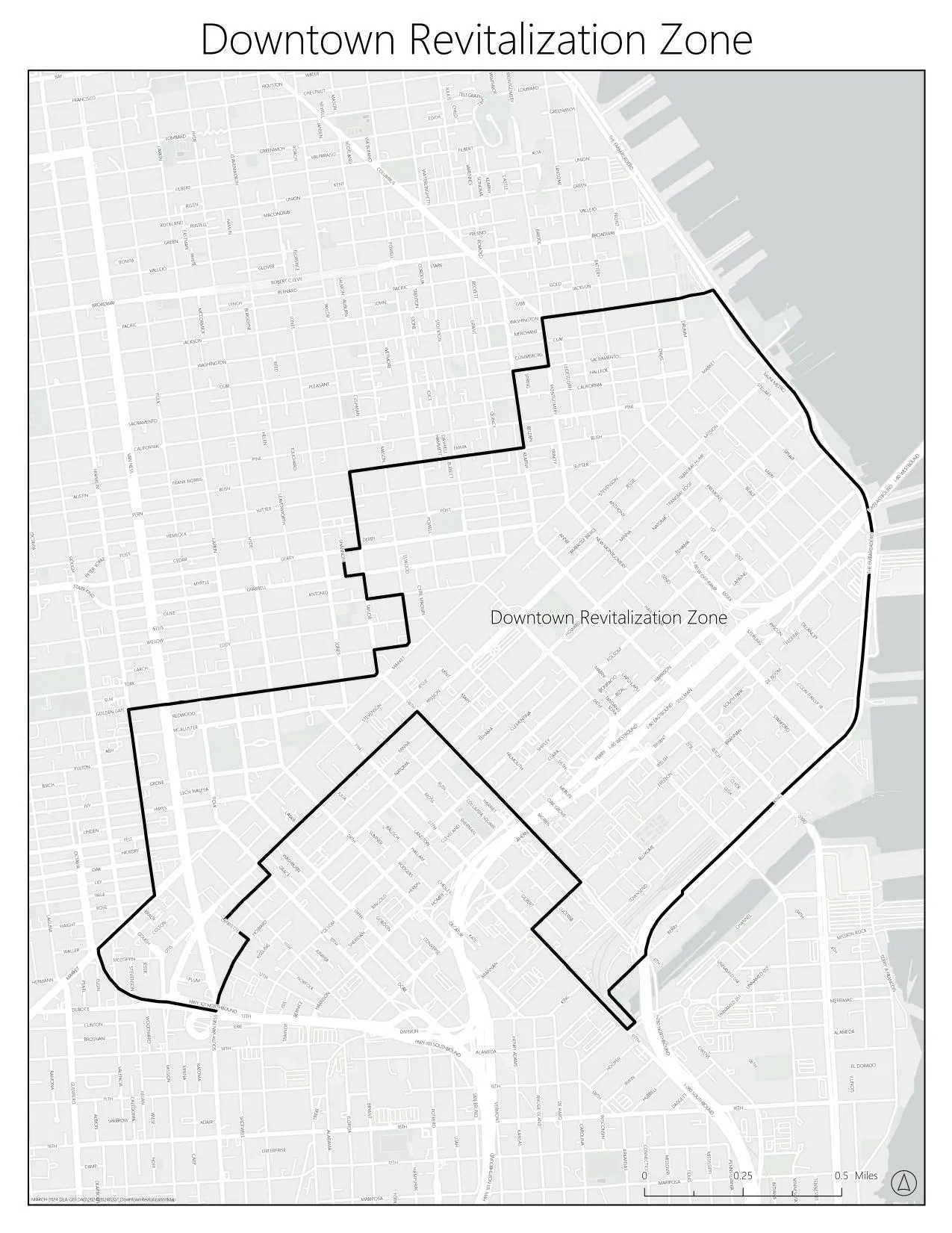
Housing converted from downtown San Francisco’s empty offices and commercial buildings can receive annual payments for up to 30 years under Mayor Lurie’s new downtown revitalization program. As part of the larger Heart of the City plan, the established district seeks to incentivize adaptive reuse and office-to-residential conversion projects in an effort to transform the neighborhood.
For developers looking to capitalize on this program, it is important to understand the specific requirements that make a project eligible, as well as the components that determine the anticipated pay out.
Who Qualifies for the Downtown Revitalization Financing District?
Location and zoning requirements
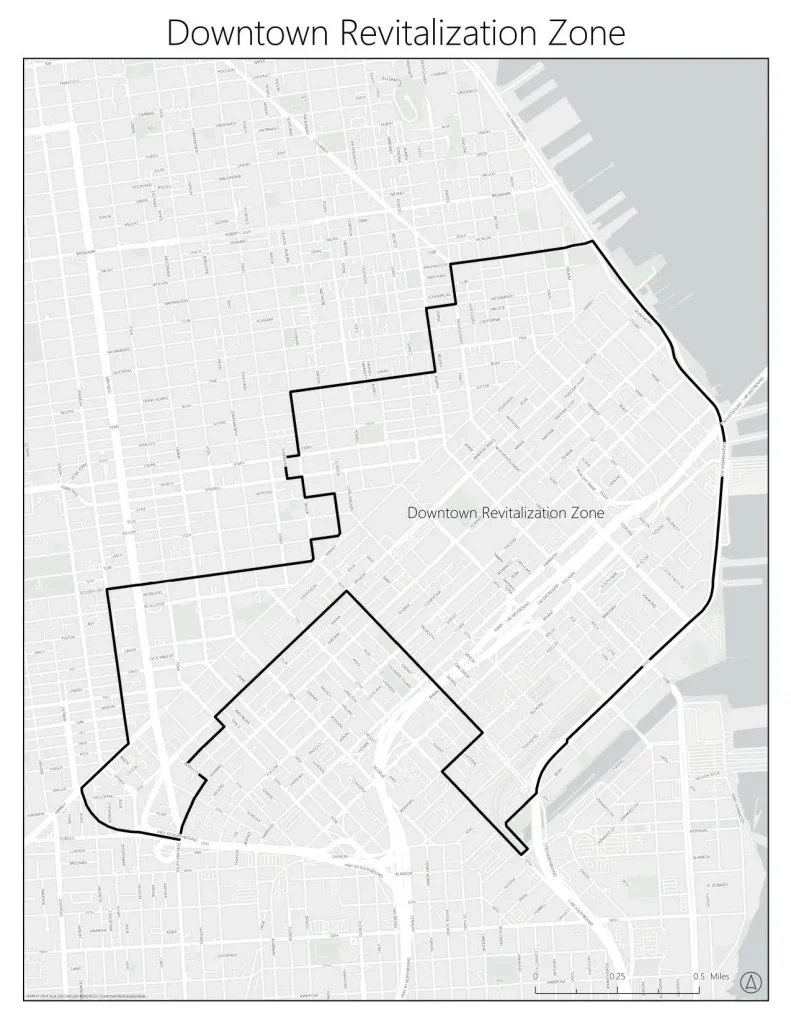
To qualify for the program, commercial-to-residential projects must be located within the Downtown Revitalization Financing District and enrolled before the permit is issued, no later than December 31st, 2032. The parcel must also already allow residential uses, but cannot be within an established Tax Rate Area. The district covers portions of the Financial District, Union Square, Civic Center and SoMA.
Project requirements
Mixed use projects are limited to commercial and residential and, at least 60% of the total gross square footage must be designated for residential use.
Labor standards
Applicants are also required to file affidavits demonstrating compliance with applicable labor standards.
How the Annual Distributions are Calculated
Upon project completion, the program determines payment amounts based on the increase in the property’s assessed value. Part of the City’s share, a percentage of the increased net value, is then distributed annually to the applicant. That means expansive renovations of class c buildings benefit significantly. Through feasibility studies, an Architect can help identify top prospects through proposed unit estimates and code research.
New Value − Existing Value = Tax Increment
Maximum Annual Distribution, “City’s Share” ≈ (1% of Tax Increment) × ~65%
Why the First 1.5 Million Square Feet Matters
Ventures within the program’s first 1.5 million square feet at First Construction Document Issuance are exempt from further state affordability mandates. Additionally, the legislation provides a local affordability waiver for the first 7 million square feet of enrolled projects in C-3 zones. Through these initiatives, conversion renovations that get in early can maximize future revenue.
The Planning Department maintains a rolling list to monitor the square footage of all participating projects. To stay on the list and maintain their position, developers should keep track of key milestones. Projects that do not meet the Planning Approval and First Construction Document issuance by the established timelines will be placed at the bottom of the list.
Prioritize Your Project’s Converted Residential Square Footage
A portion of the Maximum Annual Distribution will be distributed at a ratio defined by the Converted Residential square footage to the project total square footage.
(1/30) × Qualified Development Costs > Annual Distribution
The city provides the following example: A project that converts 90,000 square feet from Commercial use to Residential use and provides an additional 10,000 square feet of Residential use for a total of 100,000 square feet would receive 90% of the maximum annual distribution.
To maximize payments, prioritize full commercial-to-residential conversions, as mixed-use developments receive only a portion of the Maximum Annual Distribution. Crucially, the calculation only takes into account converted square footage, new residential additions are excluded.
Additionally, the Annual Distribution must be lower than one-thirtieth of the project’s Qualified Development Costs. While expenses related to professional services, administration and construction are included, land acquisitions costs are not. As part of the program, CPAs must submit affidavits listing Qualified Development Costs at the project’s enrollment and completion phases. Projects that recruit an accountant early on to keep organized and detailed expenditure logs can boost their annual payments.
(1/30) × Qualified Development Costs > Annual Distribution
Other Incentives for Office-to-Residential Conversion in San Francisco
After COVID-19 and the resulting boom in remote work, San Francisco saw a dramatic increase in office and commercial vacancy. Mayor Lurie’s new financial incentive program is just one of many aiming to revive the city and provide much needed housing.
Local code changes
OpenScope Principal Mark Hogan worked directly with the Board of Supervisors to update San Francisco’s Building and Planning Code to reduce project constraints and streamline approvals for adaptive-reuse. Additionally, SF’s Department of Building Inspection introduced equivalencies to increase flexibility with code requirements. Issues related to fire safety and egress, which once disqualified buildings for residential conversion projects, are now feasible thanks to these adaptable code compliance standards.
State legislation and funding
The urgency to create housing from unused spaces is felt at the state and federal level as well. Through California legislation, bills like AB2011 and SB6 can expedite commercial-to-residential development by chipping away some of the many regulatory obstacles. In 2022, Governor Newsom allocated $400 million in the state budget to encourage developers to create affordable housing from commercial and office buildings.
What to Do Next: Essential First Steps
Developers looking to utilize the Downtown Revitalization Financing District Program should first review the district map to highlight potential candidates for commercial-to-residential conversion. After compiling a shortlist, feasibility studies can identify top prospects. We can assist you with evaluating potential conversion candidates.